THE BOX

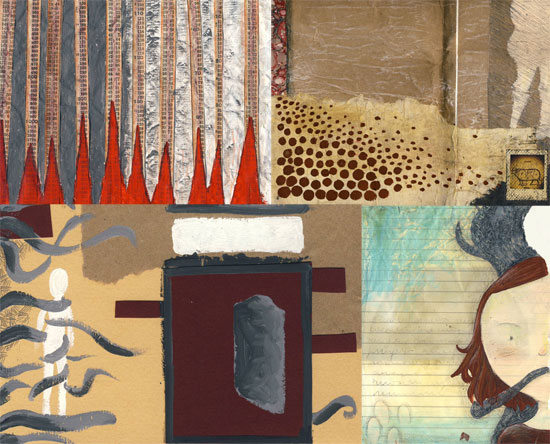
Lighter Than My Shadow Display Box

In working on Lighter Than My Shadow as a college project, I knew I couldn’t tackle the whole thing. Instead I picked a few moments from different stages of the story to work up into comics, giving an example of what the finished work might look and feel like.

At that stage, I was a lot more shy about things being made public than I am now. I don’t think I ever really believed the book would be published, and I was horrified enough that my college work had to go on public exhibition. I set about thinking of a way to display the work that felt less exposing than hanging the images on the wall. I wanted people viewing the work to have the intimate, private experience of reading a book, but equally I didn’t want my exhibition to seem unenticing and visually dull.

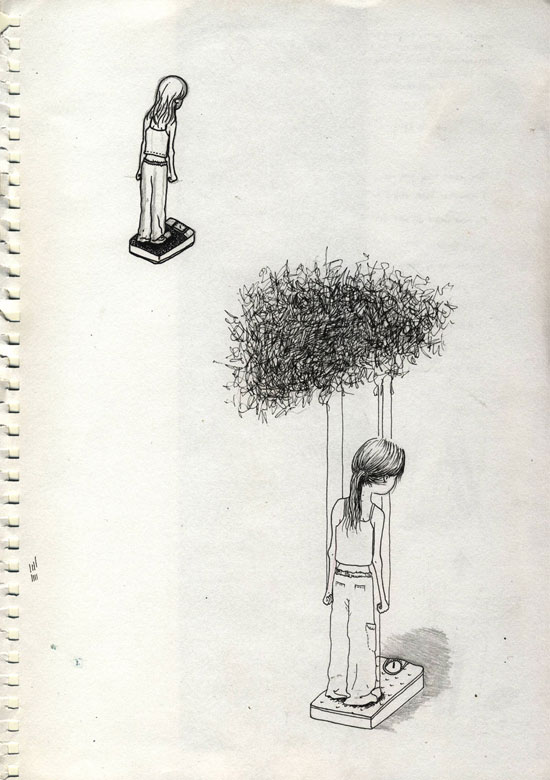
I came up with this book-box-thing, housing each of the short extracts in a separate compartment. I think this helped the viewers/readers to understand that these were disparate parts of an incomplete project, rather than something finished. The box was displayed on a plinth, and above it I hung a wire sculpture of the snarling black cloud that appears in the first illustration. I WISH I had taken some photographs – the cloud was an unwieldy 3ft across and so I decided to throw it away after the show. Perhaps I will recreate it for the book launch…

These extracts, along with a vague synopsis and some notes about why I wanted to do the project, became my book proposal. I graduated in June 2009, and showed the pages to Jonathan Cape in September of that year. In January 2010, thrilled and in utter disbelief, I signed the contract that made everything real.
HOW TO DRAW AN EATING DISORDER

I finally, formally decided to start working on my (then untitled) book in 2009 as a college project. I wanted to find a way to commit myself to getting past the false starts, and aimed to produce something representative of my big idea that I could show to potential publishers.

Every time I’d started the project, I started differently. I used a different medium, represented the illness in a different way. I’d made ‘finished’ artwork in coloured pencil, gouache, ink, acrylic, pencil – each time certain that this was what the book would look like. When I started working on the project for real, I needed to commit to a consistent approach. Wisely, my tutors at college counselled me to let my choice of medium be guided by the content of the story.

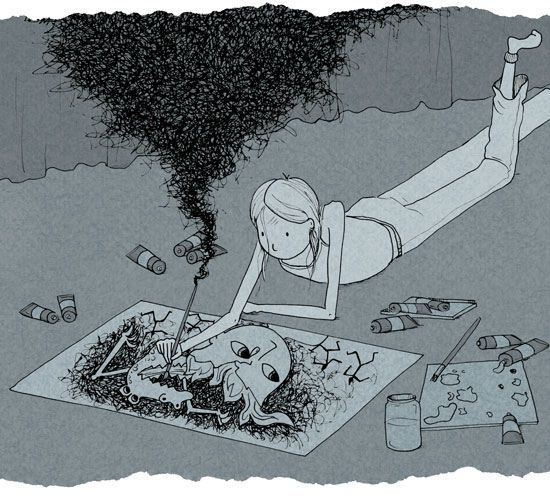
I returned to the idea that the eating disorder was a monster, as I’d painted to try to explain it to my family when I was unwell. The original painting – now lost – showed a big green scaly dragon-thing exploding out of my head. I knew I wanted something a little bit more subtle…

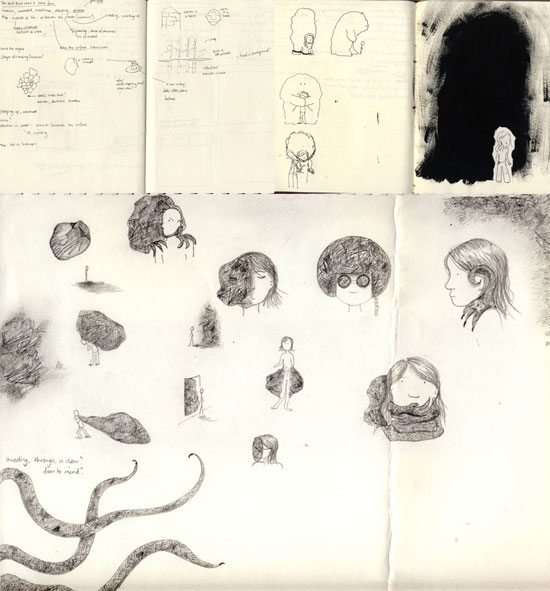
LTMS sketches 1

Very quickly, the ‘monster’ became some kind of shadow, much more abstract in form, capturing more of what living with an eating disorder had felt like.

LTMS sketches 2

I also tried interpreting the feeling in colour using paint and mixed-media collage and, though I wasn’t satisfied with the outcome it really helped process my ideas. By trying this out, I knew I wanted something that was more visually simple and muted in colour. I went back to sketching, and the next thing that appeared on my paper was this:

LTMS sketch 3

After I’d drawn this image, I couldn’t stop looking at it. I knew it was right.

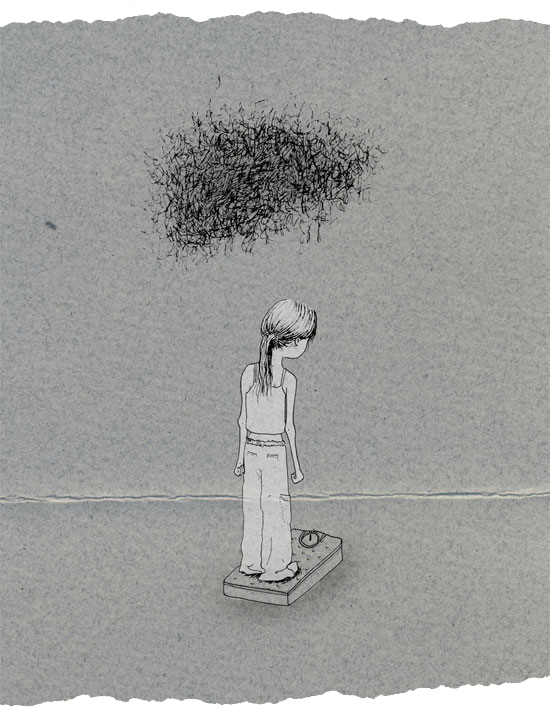
I scanned the image and manipulated it in photoshop, trying various approaches to colour and texture. In the end I grabbed a random scrap of grey collage paper lying about on my desk and dropped that in as a background. I really liked the effect, especially when I added a little semi-opaque white to define the figure. The only problem was the pesky piece of grey paper had a big crease down the middle …

…and so happened a very happy accident:

LTMS first image

The crease became a horizon line, and later on my panel borders, and this image became the first in the book.

WHY V: CATHARSIS?

Catharsis?

The question I was asked most often whilst working on Lighter Than My Shadow was, ‘Is it cathartic?’ Usually with the assumption that it was, and that was why I was doing it. It’s true that it feels important to get the story ‘out’, but out in the world, not out of me. It’s one of my biggest worries that people will see the book only as an act of catharsis.

That said, I’d be lying if I told you there wasn’t catharsis in the first draft. There was the messy, stream of consciousness getting-it-all-out. But after that, I had to try and put the emotions I was stirring up to one side. I had to make objective* decisions.: whittling down the story to what was essential. What, frankly, was actually interesting.

What I’m trying to say is that working on the book was not therapeutic, and I didn’t expect it to be. Oftentimes I was voluntarily reliving trauma that no longer affected my daily life. If it was catharsis I was looking for, I would have given up when it got hard. If it was catharsis I was looking for, I would have filed it all away in a box when I’d finished, or burned it, or something to that effect. I certainly wouldn’t want to publish it, and I doubt anyone would want to read it either.

So what was I looking for? I’ve written a lot this week about all my lofty reasons for creating Lighter Than My Shadow: breaking the silence, challenging stigma, maybe, possibly helping people. What I haven’t said anything about is this: I wanted to tell a good story. I also just wanted to write a book.

*I had supreme editorial assistance.

WHY IV: SPEAKING THE UNSPEAKABLE

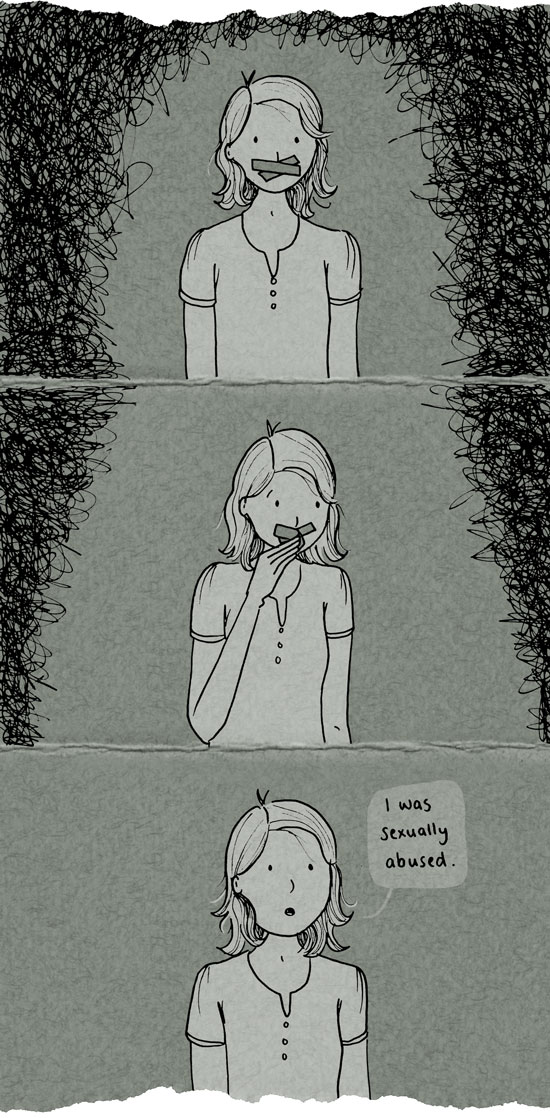
I was sexually abused

There are some things it’s just never the right time to talk about.

There have been times I’ve tried, and I find myself unable to open my mouth and speak the words. I am afraid of what people might think. I am afraid of what people might say, or not say. Moreover, I’m afraid of putting people in a position where they don’t know what to say or not say. I have been afraid that naming it makes it real, and perhaps if I don’t talk about it I can pretend it didn’t happen. There have been times when just saying the words would trigger a flashback, and it would feel like it was happening all over again. By comparison, talking about anorexia is as easy as telling you what I did at the weekend.

The story of my recovery from eating disorders is impossible to tell without including the abuse (though I did briefly consider that as an option). They are inextricably tangled up together. It’s always felt important, if not vital, to communicate how my vulnerability in early recovery was preyed upon and taken advantage of. What else can I do to try and prevent the same happening to someone else?

Somehow drawing a figure on a page and putting the words in her mouth gives a degree of separation that makes naming it easier. Not comfortable: I don’t think it will ever be comfortable. But easier.

WHY III: GENERAL HAM-FISTEDNESS

It's Complicated

Despite my experience of mental illness colouring the majority of my life, I can be remarkably inarticulate when I try to talk about it. I’ve always felt frustrated at not having the words to explain what I went through, or to express the complexities of the recovery process. And I’m not speaking grandly about trying to educate the public here: I struggle even talking to my friends. This is such a huge part of who I am, I’ve always felt that I’m not fully myself around people who don’t know about my ‘stuff’.

When I first tried to explain anorexia to my family, I painted a picture (quite how it took me a further 6 years to realise I should make a graphic novel, I don’t know). My family and I used the painting to communicate, because usually I would clam up and find myself unable to speak at all in a hospital or doctor’s surgery. Sadly the original painting has been lost – perhaps ceremonially burned, I don’t remember. I would have loved to include it in the book. The moment, however, of finding pictures more adequate to express how I was feeling, remains a significant part of the story.

Sneak peek from page 161

Sneak peek from page 161.

From that first painting it took me 12 years and I don’t want to talk about how much drawing, but now there will be a less ham-fisted telling of the story that I am (mostly) satisfied with.

WHY II: STIGMA & MISUNDERSTANDING

Awkward

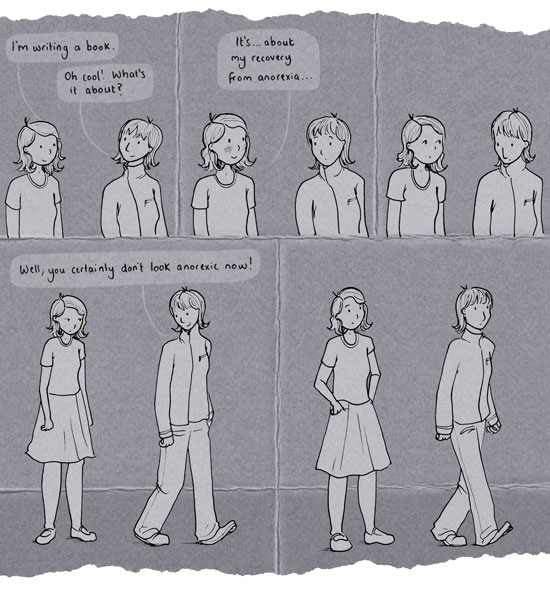
Things like this happen. It doesn’t upset me any more: I’m fortunate enough to be in a space where I can take the remark in the spirit in which it’s intended. The person means I look well. It is supposed to be a compliment. 

What bothers me more about this incident, though, is the idea that one can look anorexic. While it’s true that eating disorders can and do affect physical appearance, weight is not always the best indicator of whether or not someone is sick. During some of the hardest parts of my illness, I was dismissed by doctors because I looked ‘alright’.

Whenever I’m confronted with stigma or misunderstanding about eating disorders, I try to remember there was a time when I held the same misconceptions.

I used to think that eating disorders were a choice. I used to think that anorexics were vain teenage girls not eating because they wanted to look like supermodels. I thought they should stop being stupid and just snap the heck out of it.  Until anorexia was the diagnosis given to me, and someone asked, “Why don’t you just eat?”

My lack of understanding meant that recovery was a steep learning curve. I fully expected that everything would return to ‘normal’ once I reached a healthy weight. I gave myself a very, very hard time when it didn’t.

There are so many misconceptions about eating disorders, and what generally appears in the media doesn’t help. You could be forgiven for thinking that the only eating disorder is anorexia, and that anorexia only affects white teenage girls. That the condition is only serious or life-threatening when someone is at a dangerously low weight. That’s it’s all about appearance and wanting to be thin.

I wonder, if I hadn’t had such preconceived notions about anorexia being a stupid illness, might I have approached recovery differently? Might I have been kinder to myself? Would it have been helpful if I’d been prepared for the deep psychological work it would take to get better, and known that ‘normal’ would never mean the same as it had before?

These days, I try not to get angry when someone asks a poorly worded question, or makes the assumptions I used to make. It reminds me why I wanted to write a book, and that talking about my illness honestly and openly is important. The more we talk about things, hopefully the less people will mistake these complex mental illnesses for vanity and stupidity, in others or in themselves.

WHY

I talk a lot about how creating Lighter Than My Shadow was hard, probably harder than anything I’ve ever done including recovering from an eating disorder. I’ve often been asked (and often wondered myself), why do it then? Why put myself through reliving so much that I had happily left in the past? There were times it felt like perhaps the worst decision I’d ever made.

So I gave a great deal of thought to why. Not only so I could explain my motivation to other people, but so that when I was feeling as though dredging up the past was an awful waste of time, and worrying whether anyone ever want to read it, I could remind myself. This is why.

1) EATING DISORDERS THRIVE IN SECRECY

Weird Eating

My eating disorder made me a liar. Everyone knows how it goes: “Oh, you’re not having lunch?” “No, I ate earlier.” Clearly you didn’t. Or perhaps you did, but you didn’t want people to see what you ate, or how you ate it. The rules and rituals I needed to follow to allow myself to eat were elaborate and, quite frankly, embarrassing. I didn’t want people to watch me, worry about me, whisper about me.

Later, when it wasn’t anorexia but binge-eating, I felt even more ashamed of my behaviour. I ate in secret, usually at night. I avoided visiting the same grocery shops because I was afraid the staff were analysing my purchases. I stole food.

All in all, my eating disordered behaviour disgusted me. The more disgusted I felt, the more I hated myself. The more I hated myself, the more I needed to do something – anything – to make myself feel better. Like restricting my food…

It wasn’t until I started talking about it that I managed to start breaking that cycle. But admitting you are struggling, even to someone you know will be supportive, is so difficult. To me it felt like admitting weakness and vulnerability meant I was a failure. I didn’t want to be someone who needed help.

This was one of the first reasons I wanted to write a book. Even when you’ve broken that silence, in recovery from an eating disorder you can feel so alone. Reading books was the first thing that helped me realise that I wasn’t the only one, that what I was facing was an illness, not some kind of personal failure. Even if there are hundreds of books out there already, another can’t be a bad thing. The more stories of eating disorders that are told, the more people will be aware, empathetic, understanding. Perhaps it might help someone feel less afraid, or less ashamed than I did of asking for help.

FALSE STARTS

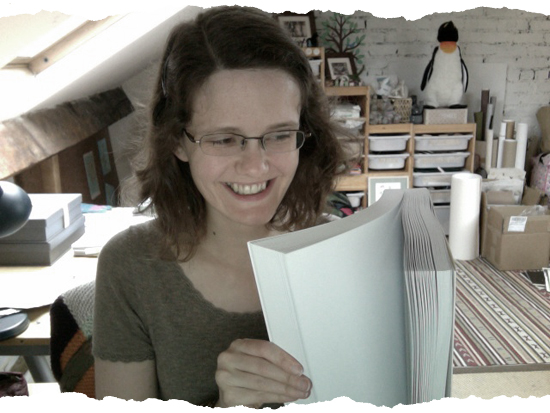
This week I received the lastest dummy book for Lighter Than My Shadow, and learned that it will be the longest graphic novel Jonathan Cape have published. Even knowing how long it took to draw those 507 pages, I was quite astonished by its ‘bigness.’

dummy book

I always knew the book would be big. I wanted it to be, because I loved reading comics that lasted me more than a few hours. But I also knew it had to be, because I wanted to dig really deep into the process of recovery, talk about all the stuff I’d found lacking in other books I’d read and tell the truth about how long it takes. But the idea was so big that I didn’t know where to start.

In 2006 I attended the very first graphic novel writing course run by The Arvon Foundation, taught by Bryan Talbot and Steve Marchant. This proved a turning point of sorts, and if you have a similarly big project that you’re struggling to get your head around, I can’t recommend these courses highly enough. With the support and enthusiasm of the tutors and other students (and in particular Bryan Talbot’s invaluable teaching) I began to take my idea seriously, and get something of a foothold on where to start.

And I did start. Over the three years following that course, I started work on the book maybe seven or eight times. Sometimes it was just a page of scribbled ideas and planning; other attempts included several pages of ‘finished’ artwork. But every time I would end up feeling overwhelmed, or frustrated by my ineptitude with the medium, or simply not ready to face the emotions the project was stirring up. I’d put my progress away in a box and forget about it. Until next time I started.

I lost count of how many times this happened, how many beginnings were abandoned. But the idea wouldn’t go away.

The idea wouldn't go away

Next week I’ll be sharing a series of posts about why the idea wouldn’t go away, and even when it felt overwhelming and too big to manage, I decided it was important to keep going.

BEFORE IT WAS A COMIC…

Lighter Than My Shadow was going to be a prose book.

I’d always enjoyed illustration, and indeed always wanted to be an illustrator. But I was one of those people who thought that books with pictures were for children, or perhaps for those who weren’t able to read ‘proper’ books (you can imagine what I thought about comics).

Until I stumbled upon the book that changed everything.

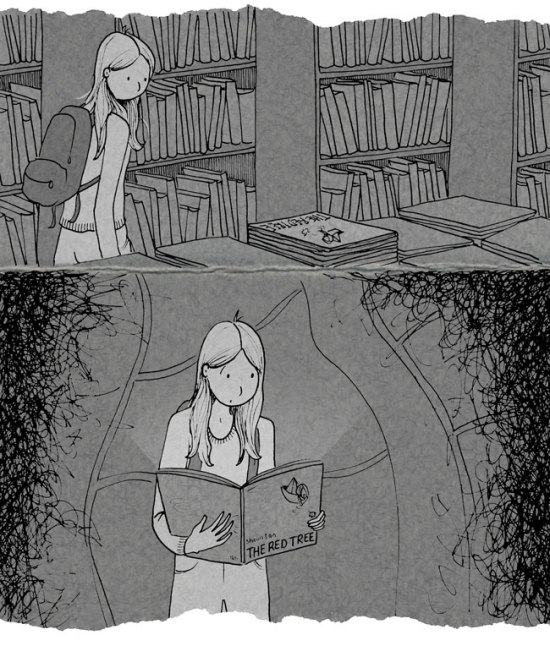
The Red Tree

The Red Tree by Shaun Tan is a picture book, but in its few short pages of sparse text and deeply allegorical images, it resonated more with my experience of mental illness than any prose book ever had. I’d never seen pictures so eloquent, nor found so few words to be so profound. There was something about the combination, the two working together…

I felt like I’d struck the most unique and exciting idea anyone had ever had, and a whole world had opened up to me. Books with pictures tackling serious subjects: imagine that! I enthusiastically told my friends that this book idea I’d been harping on about for years was going to have pictures, and be unlike anything anyone had ever seen before.

Maus

…and so I read my first comic in 2005.

From there it was only a short step to discover a whole world of people telling serious stories with pictures. With every new book I read I was filled simultaneously with inspiration, and with crushing despair that I could never live up to the quality of storytelling these artists were achieving.

And yet, there were hundreds of books about eating disorders. If I was going to bother telling another story about anorexia, I wanted to do so in a way that might bring something different to the conversation. Though I lacked confidence in my skills as an illustrator, I was pretty sure I was a better artist than I was a writer.

The change was like flicking a switch. Once I discovered graphic novels existed, I knew that was how I needed to tell my story.